Walk down a block in Carroll Gardens or Bed-Stuy on a warm evening and you hear it all simultaneously: giggling increasing from a roof, a neighbor's playlist drifting across a slim side yard, a bus sighing at the corner. That soundtrack is part of Brooklyn's charm, however when you're attempting to check out, place a kid down for a snooze, or host buddies without a target market, a deck needs specified sides and some acoustic buffering. Done right, a personal privacy wall surface does greater than block sights. It anchors the room, softens noise, and transforms the means the deck really feels below your feet.
As a deck contractor who has actually constructed and rebuilt on brownstone roofing systems, tight backyard strips, and vast new terraces near the waterfront, I have actually found out that privacy is never a solitary option. It's layers, compromises, and details that divide a wall surface you endure from one you admire on a daily basis. Below is a sensible guide grounded in what works in Brooklyn: code-aware design, materials that survive salted air and city gunk, and patterns that play nicely with rowhouse elevations and tiny impacts. The instances referral work we have actually done or assessed for clients at Deck Master Home Improvement throughout areas from Park Slope to Williamsburg.
What privacy truly means on a Brooklyn deck
Privacy in the city is not outright. You can not block a tenth-floor sightline to a fourth-floor roof covering deck without building a barrier that will contravene of code and next-door neighbors. The objective is targeted screening that improves convenience where it matters: a diner table protected from the adjacent stoop, a jacuzzi corner no one can see from the back home windows, a lounge location safeguarded from the midafternoon western glow. For a tiny ground-level deck in between two fencings, that may indicate a solitary 6 to 7 foot display at the rear and a vine-covered trellis on one side. For a roof, it usually implies a mix of low planters, slatted wind displays, and an overhead component like a pergola.
A good deck builder begins with line of visions. We base on your deck, look towards bordering windows and lawns, and keep in mind the angles that matter. If you just need a 40 degree slice of privacy from one second-floor window, positioning a 5 foot-wide display off-center can be much better than covering the entire deck in boards. It keeps air and light moving, which your plants and your visitors will certainly thanks for.
Codes, techniques, and the fact of approvals
Brooklyn is governed by the New York City Building Regulations and your neighborhood zoning whole lot's particular constraints. After that there are historic districts, which add another layer. The brief version: in back backyards, a 6 foot fencing along home lines is typical and rarely questionable if it's timber or similar. On rooftops, anything visible from the street will get even more analysis, and height limits connect to guardrail demands and parapet conditions.
Here's how we navigate it without overpromising. Rooftop personal privacy walls typically live as extensions of called for guardrails. If the guardrail is 42 inches, you can develop a mixed setting up where the reduced 42 inches is code rail, and the upper 18 to 36 inches is semi-open screening. This strategy checks out lighter to reviewers and next-door neighbors. In historic districts, we established displays back from the roof side to keep them out of road view. Even little problems, 6 to 10 feet in some cases, can make the distinction between a very easy authorization and an excruciating back-and-forth.
For ground-level decks, side yard advancements are common. Brooklyn lots are slim, and a charitable privacy wall can munch at egress clearance or grill ranges. We keep at least 36 inches of clear path wherever a lawful departure path exists and regard the common 10 foot clearance between open-flame grills and combustible wall surfaces unless you switch over to electrical or mount correct thermal barrier. Codes are a floor, not a ceiling. Our work is to fulfill them while accomplishing your goals cleanly.
Material selections that make their keep
You can build a personal privacy wall from nearly anything you can attach right. The test is exactly how it takes care of moisture, UV direct exposure, and the dust of a city. The pick that works on a Hudson Valley farmhouse may not last 2 winter seasons on a Gowanus roof. Here's what has actually confirmed itself in Brooklyn.
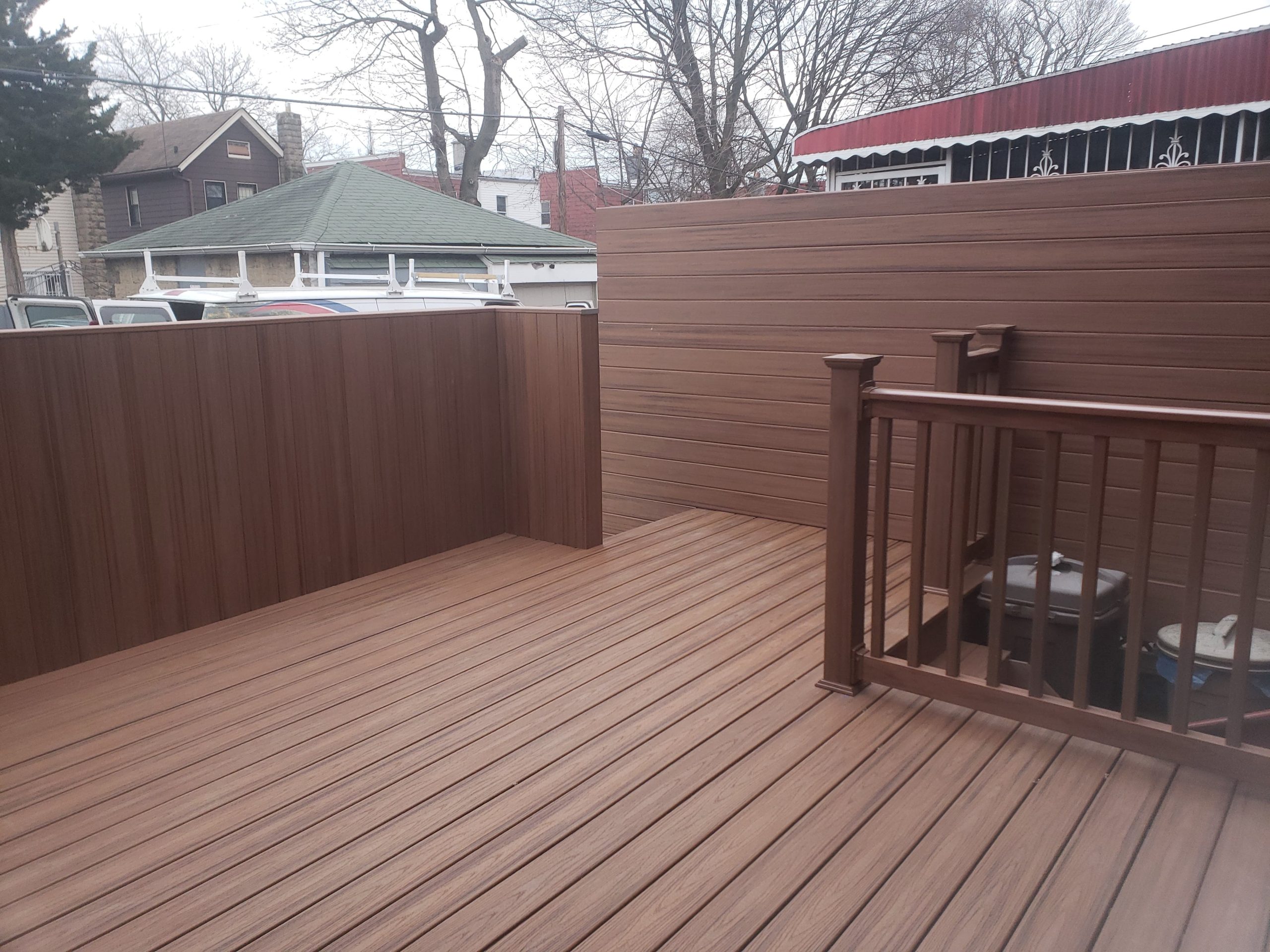
Composite decks and matching screens. House owners choose composite decks for low maintenance, and the exact same reasoning puts on privacy walls. Brand names that use slat or screen systems with concealed fasteners create a natural appearance and less points of failing. We such as compounds for wind-exposed roofs where timber dries, checks, and grays quickly. The compromise is temperature. Darker composite slats can run warm in direct sun, so we specify lighter shades or break up large surfaces with growing to tamp down heat gain.
Thermally changed or thick hardwoods. If you want real wood, thermally modified ash or want stands up much better than untreated cedar in the city. We likewise utilize ipe on custom-made decks when spending plans enable. It weathers wonderfully if left to silver, and it withstands rot and bugs. The trade-offs are weight and sourcing. Ipe is heavy, which matters on older roof structures, and it needs predrilling and stainless bolts. Thermal timbers are lighter, look crisp, and take a discolor uniformly, though the surface can require refreshing every number of years completely sun.
Powder-coated light weight aluminum. Aluminum slat systems slot into posts with tidy lines and no warping. On a roofing system with limited online lots capability, light weight aluminum lusters since it is both solid and light. Powder coat withstands salt air, which you really feel also in inland areas on gusty days. The appearance alters contemporary, so we frequently match it with a wood or composite deck and plant to warm it up.
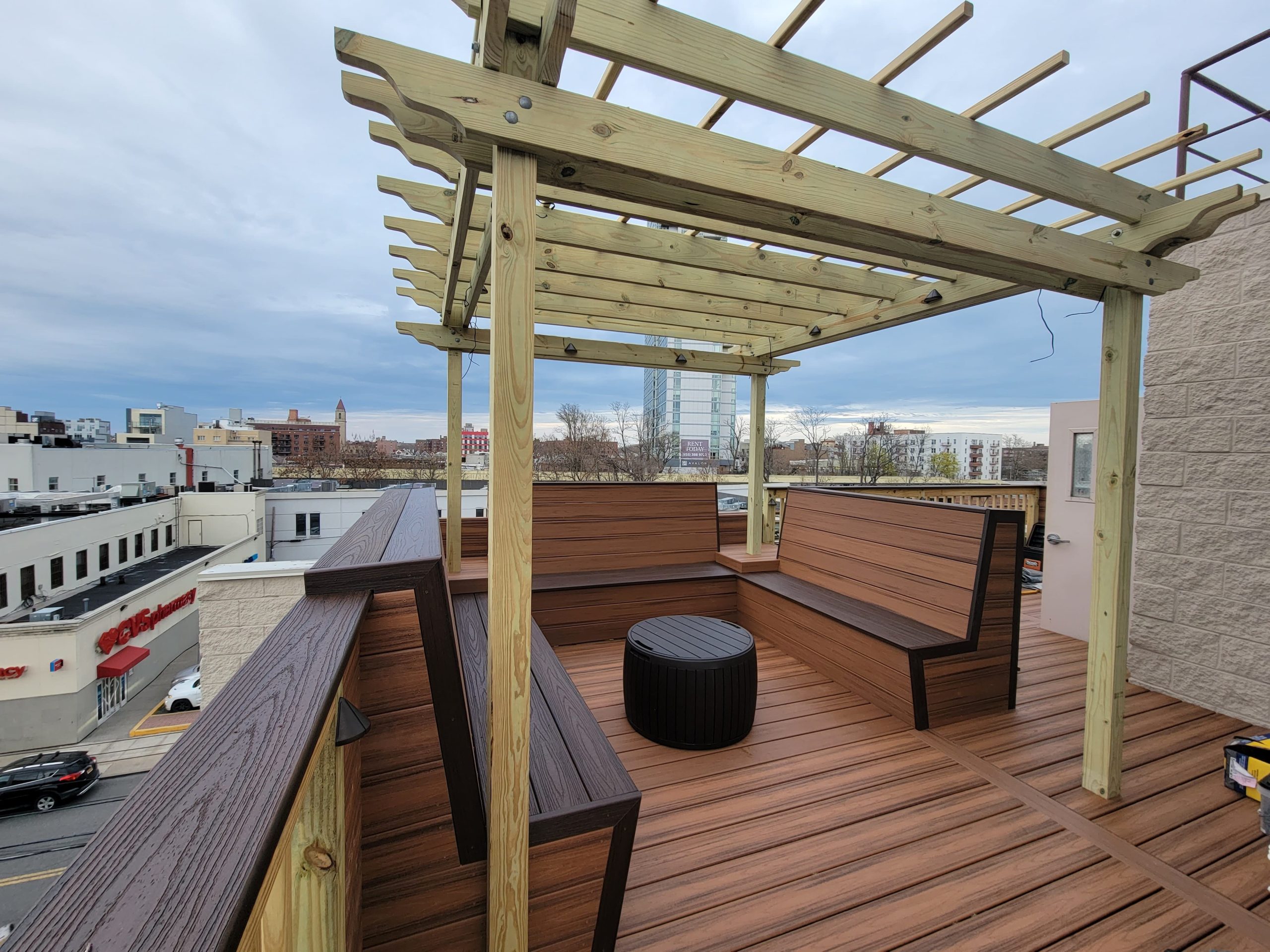
Steel and perforated panels. Where we require rigidity in a thin account, we'll make use of steel structures with perforated sheet infill. The openings damage the wind and dapple light onto the deck. It's a great step for narrow lawns where a solid wall would really feel overbearing. Plan on occasional touch-ups if a mower or harsh ladder meets the frame, despite having hot-dip galvanizing and powder coat.
Plant-based wall surfaces. Planters with trellises, bamboo in troughs, or espaliered fruit trees container do a lot of job, particularly when integrated with a pergola or gazebo edge. In Brooklyn, bamboo needs containment and varieties selection. Clumping varieties in aluminum-lined planters behave. Running types in soil will certainly travel into the neighbor's tomatoes, and no one takes pleasure in that conversation. Plants include acoustic gentleness that hard wall surfaces can not match, and in winter months you can switch in evergreen selections or include reed screens to preserve coverage.
Glass with texture. Frosted or fluted glass inserts offer privacy without compromising light. These panels set you back more and need cautious preparation for wind loads and safety glazing. They work best as accents as opposed to whole stretches unless you desire a really modern appearance. We avoid mirrored surfaces facing next-door neighbors. Representations can really feel aggressive in limited blocks, and they reveal grime quickly.
Pattern, porosity, and the way light moves
The distinction between a hefty wall and one that breathes generally boils down to pattern. Strong walls work beside loud streets or when you absolutely must reduce a sightline, but on a common deck, 20 to 40 percent visibility hits a pleasant area. Slats established with a 1:4 proportion of gap to board, counter battens, or lattice with a limited 1 inch aperture all shield sights without eliminating airflow.
One pattern we utilize for brownstone rooftop decks pairs horizontal slats on the reduced half with an upright louvered section up top. The horizontal area straightens with the deck boards and guards the seating area. The vertical louvers tip toward the neighbor at a set angle, pulling winds throughout the top while blocking a straight view down. It reviews as a tailored item of millwork instead of a fence dumped on a roof.
Geometric displays in powder-coated light weight aluminum, the kind with laser-cut Moroccan or midcentury patterns, can be tempting. A few panels turned into a backdrop appearance great. Twenty feet of it can really feel hectic and really loud in sunshine. If you enjoy that appearance, utilize it in a focal location, then change to less complex slats elsewhere. In little footprints, your eye desires an area to rest.
Pergola or gazebo: overhead does greater than shade
Privacy is not just lateral. The fastest means to create an area sensation outdoors is to add a cover, also a partial one. A pergola on a Brooklyn deck makes its maintain by managing high sightlines from upper floors and diffusing sound. Slatted rafters or retracting covers let you modulate sun while providing a visual top to the room. A gazebo, utilized much more moderately in the city, gives a specified specific niche, valuable when your deck spills directly from a kitchen and you want a separate read for lounging or dining.
When a customer asks whether to spend on a pergola or taller privacy wall surfaces, we speak about percentage and range. A pergola at 8 feet with a 12 to 16 inch-deep rafter account can reduce viewed height on close-by displays, making a 6 foot wall really feel best rather than cage-like. It additionally gives anchors for illumination, fans, or heaters, which matters on decks you plan to use nine months a year. In salted air zones near Red Hook or Greenpoint, we define light weight aluminum or steel pergola frames with wood-look cladding if you want heat without maintenance.
Sound: the difficult problem
Sightlines are simple contrasted to appear. A high wall surface can stop a gaze, however your neighbor's conversation will certainly ride right over the top. In tight Brooklyn lots, the most effective acoustic renovations come from diffusion and absorption, not brute blocking.
We integrate planters in front of wall surfaces with staggered hedges to spread reflections. High grasses, like miscanthus or switchgrass, flutter and break up higher regularities. On the wall surface itself, slats set off the face with a small air space reduce slap-back. For roof decks where a compressor or a next-door neighbor's HVAC is the perpetrator, a brief, dense panel around the sound source works far better than one big wall surface twenty feet away. Mass-loaded plastic sandwiched between composite or timber layers can assist in surgical places. It is not lovely on its own, yet concealed within a mounted area it makes the area it takes.
Do not anticipate wonders. A properly designed privacy plan can cut viewed noise by an obvious margin, especially in the high-frequency array. Reduced rumbles from traffic persist. White noise from a small water feature or follower can cover what a wall surface can not, and on hot days the added air flow rates anyway.
Anchoring walls without hurting your deck
Privacy wall surfaces focus lots. On a ground-level deck, a 7 foot screen imitates a sail in a summer thunderstorm. On a roof covering, that lots travels through the deck frame and right into the roof framework, which might be a century-old timber assembly. This is where a professional deck builder spends for themselves.
We reward personal privacy walls as part of the architectural plan, not afterthoughts. That suggests continuous grounds or bigger deck posts beneath bigger wall surfaces, through-bolted links, and lateral supporting hidden inside the setting up. On composite decks, we constantly tie wall surface blog posts right into the underpinning, never simply the surface area boards. On roofings, we stay clear of any infiltration of water resistant membranes unless definitely necessary and only with a contractor's detail and sign-off. Ballasted planters tied to steel structures can secure lighter displays safely without a solitary fastener listed below, a technique we have actually utilized on multiple condo roofs where penetrations were off the table.
Wind testing in the area is sensible. Prior to final cladding, we'll stage temporary panels and examine deflection under a great push. You know promptly if an article spacing of 6 feet is right, or if 4 feet buys you more peace during nor'easter s.
Color, surface, and exactly how to maintain it resembling new
Brooklyn grit is genuine. Metros breathe it out, wind carries it, and by March you see it on every straight surface area. A privacy wall surface with slats and appearance conceals dust much better than a flat panel. Mid-tone shades make a difference. Pure white is crisp on the first day and an upkeep job by day 10. Near-black looks wonderful on contemporary composite decks Brooklyn Deck builder but shows plant pollen and salt. Tobacco, driftwood, or coffee tones strike a balance. In shaded backyards with block backdrops, cozy grays with brown touches read right at all hours.
For wood, we advise permeating spots over movie surfaces. Film looks incredible for a year and afterwards peels off in high UV. A high quality oil-based or hybrid penetrating tarnish soaks in and discolors beautifully. Plan on a light wash and recoat every 18 to 36 months relying on direct exposure. For aluminum or steel, stick to respectable powder-coat systems and demand a marine-grade choice if you're anywhere near the waterfront or on a high roofing system. You pay even more up front and less in headaches later.
Integrating lights and power thoughtfully
Privacy screens give you vertical property to place light without blinding any person. Low-glare linear LEDs put under slat caps, downlights established into pergola beam of lights, and a few well-aimed sconces can make a little deck feel willful after dark. We run circuitry in avenue concealed within articles or behind cladding and include solution loops so panels can be removed for maintenance without cutting runs.
Avoid aiming lights toward next-door neighbors' windows. A warm 2700K glow, shielded and guided downward, maintains affection and keeps the vibe pleasant on both sides of the fencing. If you plan to work outdoors or cook at night, add a separate, brighter job light on a various circuit. Dimmers are non-negotiable. You want control over intensity as periods and uses change.
Planting methods that collaborate with walls as opposed to dealing with them
Plants and privacy support each other when planned with each other. On city decks, we containerize virtually everything, which means weight computations issue. Light-weight soil blends, aluminum planters, and drip watering reduce maintenance and protect structures.
Climbers like clematis, star jasmine, and sturdy kiwi cover trellises rapidly in Brooklyn's environment. Wisteria is effective and stunning however will certainly tear a light trellis apart in time if not trained strongly. For evergreen winter months protection, consider English ivy with a stringent upkeep plan, or better, evergreen jasmine where microclimate allows, and boxwood or holly in planters at lower heights. Bamboo, again, just in lined planters with types picked for clumping behavior. In narrow backyards, layering matters: a low planter bench against the wall surface, taller hedges behind, and a slim slatted screen beyond. The staggered elevations damage sightlines better than one tall flat plane.
Budget, phasing, and what to do first
Privacy projects can be phased without remorse if you believe in components. Start with the most invasive sightline and address it with a durable display or pergola side, after that deal with the deck with a period. You will certainly discover whether the morning sunlight is harsher than expected or if weekend noise really shows up from the contrary direction.
For a regular Brooklyn yard deck of 12 by 16 feet, a well-detailed composite privacy wall spanning 12 feet with integrated posts, cap, and illumination may run in the mid four numbers to low 5 figures depending upon material and complexity. A pergola adds a similar array. Planting can be modest or fancy. Saving by reducing corners on framework is incorrect economic climate. We see too many DIY screens bolted just to surface area boards, leaning by the initial winter.
Deck Master Home Enhancement often suggests an A-B-C method: anchor one strong element, supplement with greenery, then refine with accents like a textured panel or a built-in bench. Clients value that it keeps the deck functional at each stage without wrecking completed work.
Case notes from the borough
A south-facing Possibility Levels roofing system deck had a textbook trouble. Neighbors on a somewhat taller brownstone can see straight onto the lounge zone. A strong wall would get too hot the area. We developed a 36 inch planter across the back, then a 42 inch guard incorporated with 24 inches of tilted upright louvers above, set to block sights from the neighbor's home windows while inviting wind from the west. The planters housed bayberry and little bluestem, which add movement without mass. A slim aluminum pergola with a retracting textile canopy finished the structure. The result checks out like a living room with a horizon, not a box.
In Bay Ridge, a slim ground-floor deck required acoustic assistance from street traffic. Strong composite panels really felt claustrophobic. We used a double-slat system: outer slats straight, internal slats upright with a 1 inch gap, creating a shallow honeycomb. Behind the panels we installed mass-loaded vinyl midway up, concealed from sight. The family reported an obvious conditioning of the piercing mobility scooter gripe that made use of to control breakfast.
A Clinton Hillside brownstone in a site district desired privacy from the nearby carriage home while keeping the deck almost undetectable from the street. We established a cedar trellis screen 10 feet back from the parapet, only 6 feet wide, straightened with the dining table. Exposure from the general public means was effectively no. The targeted action price less than covering the entire boundary and pleased the Landmarks Conservation Commission with a simple staff-level approval.
Working with a deck builder that respects the block
Brooklyn is a small town. Word journeys, and your deck belongs to a common streetscape whether it sits in a backyard or on a roofing. A deck contractor ought to listen for just how you live, yet also for just how your neighbors live. We ask about quiet hours, regular events, and whether you such as to yard or favor plants that ask little of you. After that we equate those routines into wall heights, materials, and patterns that offer you without provoking a long-simmering fencing dispute.
At Deck Master Home Improvement, we make personal privacy with upkeep in mind. Bolts are accessible. Panels raise out for fixings. Surfaces are spec 'd to endure city crud and ocean breeze. If you end up marketing, purchasers see a personalized deck that really feels constructed in, not tacked on. The best personal privacy wall surfaces include that impact of permanence.
A practical, minimal list for getting it right
- Identify the two or 3 crucial sightlines by basing on the deck at the times you use it most. Style to block those, not the whole world. Choose materials to match your deck and direct exposure. Composite and aluminum stand out on roof coverings, thermally modified wood beams at ground level with shade. Keep walls partly open where feasible to preserve air movement and convenience. Aim for 20 to 40 percent visibility with slats or louvers. Plan structure early. Tie messages into the subframe, regard roofing system membranes, and dimension periods for wind. Do not depend on surface boards. Layer plants with displays for sound and soft qualities, and consist of watering so the system grows without day-to-day attention.
When a pergola transforms the entire equation
There are jobs where a pergola seems like an extravagance up until you deal with it for a week. On a Sundown Park roof with zero color, we constructed a slim steel pergola with operable louvers over half the deck. The privacy wall surfaces stayed low, only 5 feet, but the overhanging blades cut the view from taller next-door neighbors and permitted the family members to tune light and breeze. It felt cooler by a number of degrees. In summer season tornados, they secured the louvers and kept pillows dry. In wintertime, the open sky returned. Often the best personal privacy wall is the one you barely observe overhead.
Final idea: privacy as style, not defense
Privacy walls can look protective or they can look intentional. The difference hinges on proportion, pattern, and the means the wall surface joins the deck's life. Tie the screens to a pergola beam of light. Allow a vine case a corner. Use a built-in bench to enlarge a base and include storage space. Consider the wall as furnishings scaled to the outdoors instead of a boundary alone.
Brooklyn does not provide you acres to roam, however the right envelope around a deck makes every square foot matter. Whether you prefer composite decks for simplified treatment, yearn for the feel of custom-made decks in hardwood, or want a downplayed pergola or gazebo to arrange the area, well-designed personal privacy wall surfaces turn a system right into a location. Finished with care, they value your neighbors and your block, and they silently make your home bigger, much more comfy, and much more yours.
Deck Master Home Improvement 210 Avenue N, Brooklyn, NY 11230 (718) 356-0095